As a parent watching your child navigate developmental challenges, it is natural to feel overwhelmed and wonder what kind of support they actually need. When doctors or teachers start using terms like physical therapy and occupational therapy, the overlap can get confusing real quick.
While both therapies play a massive role in helping your child thrive, they focus on entirely different milestones. Understanding how they work is the first step toward getting your child the right support. Let’s break down the core differences between the two so you can confidently navigate the next steps in your child’s development.
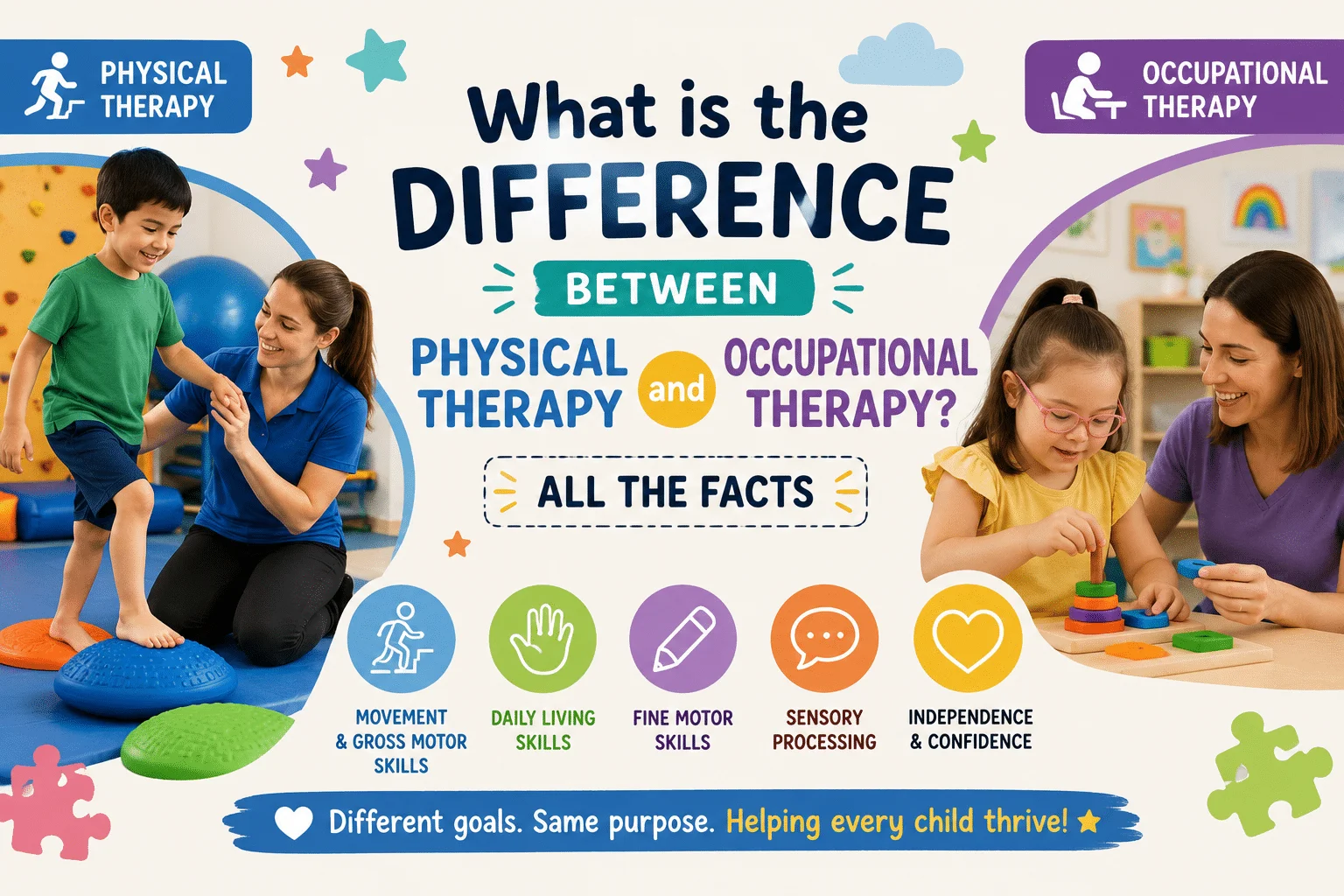
The major difference between physical therapy and occupational therapy is that PT focuses on helping your child regain their physical movement and functional abilities, while OT gears towards helping them regain their ability to independently perform everyday activities like bathing and dressing up, improving their mental health, as well as physical rehabilitation.
Understanding Physical Therapy
Physical therapy, also known as ‘physiotherapy’, is the treatment in healthcare that focuses on improving physical movement. It is a treatment that concentrates on developing an individual’s gross motor skills to manage pain and stiffness in certain body parts after an illness, a surgery or while recovering from an injury. Sometimes, it is recommended as part of a broad plan for managing pain or a particular health condition.
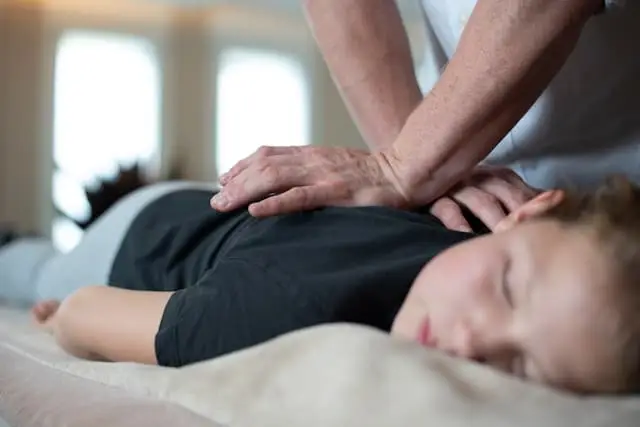
Examples of conditions or injuries that may require PT are developmental delays, lymphedema, back and neck pain, carpal tunnel syndrome, knee ligament injuries; ACL tears, stroke recovery, pelvic floor dysfunction, cerebral palsy and a lot more.
The healthcare provider that helps individuals through this process is called a physiotherapist or physical therapist. It is important to know that a physiotherapist is not a medical doctor, and this implies that they can’t give diagnoses or perform surgeries. They see patients after a proper diagnosis from another healthcare provider.
PT is usually an outpatient care that can be done at home, in a specialised physiotherapy clinic or at the hospital, in cases where your child has to begin the treatment there after a diagnosis or an injury. It can be beneficial to the nervous system, musculoskeletal system, cardiopulmonary system, integumentary system, and body parts like the bones, skin, brain, lungs, joints, heart and muscles.
You may ask, ‘What are the risks of physical therapy for my child?’ PT is considered to be very safe and effective. Although, as with any physical activity, the small risk attached to it may include triggering pain from an existing injury. So, it is important to consult your child’s physical therapist on safe ways to help them with their movements, especially if your child has been given the greenlight to exercise at home without their PT’s supervision.
The Primary Focus of Physical Therapy
Biomechanics: In simple terms, this is the science of how the human body moves. It is the combination of biology and physics to study how the bones, ligaments, tendons, and muscles work together. Physiotherapists use this to tackle the root cause of a person’s pain and come up with a plan that hastens recovery and prevents a recurrence. Understanding this helps the therapist to not just treat your child’s symptoms but also to find the exact reason for the discomfort. Physiotherapists also use biomechanical analysis tools like motion capture systems or force plates, visual observation, gait analysis, range of motion assessments and strength testing to analyse a patient’s movement pattern.
Gross motor skills: What exactly does “gross motor skills” mean? See it as our everyday movements, like walking, standing, jumping, crawling, sitting, running, climbing, doing sports and a lot of other activities that require the use of large muscular groups. When the gross motor skills are diminished, it limits a child’s ability to handle day-to-day tasks and engage in activities.
Physical therapists focus on evaluating and treating gross motor deficits while using treatments that are tailored for individual needs.
Pain management: Pain is no friend to anyone, and depending on how intense it gets, it can impact a child’s life and hinder them from going about their routines. Managing the pain that comes with illnesses and discomforts that require PT is one of its primary focuses. Pain can stem from different sources, which is why PT, as a holistic and non-invasive approach, centres on addressing the real cause of the pain as opposed to being reliant on pain medications.
Physical therapists make use of specially designed exercises, manual therapy and several other techniques to improve mobility and agility, which in turn enhances pain management.
Preventing functional decline: The main aim of this focus is to prevent the complications of being immobile for too long. A 10-year-old has been diagnosed with cerebral palsy that stiffens his leg muscles. At first, he is able to manage walking around with crutches, but as time passes and this child grows, his leg muscles remain almost static. In a situation like this, a timely intervention of a physiotherapist can help him with a PT plan that would help loosen his muscles and rebuild his strength.
In a nutshell, preventing functional decline involves immediate or early mobilisation, progressive resistance training and simple voluntary exercises to strengthen the affected area.
Common Goals in Clinical Setting
For every specialised physical therapy treatment, there are S.M.A.R.T goals that a physiotherapist sets and aims to achieve as an individual progresses (short-term goals) and by the end (long-term goals) of the sessions. Some of these goals include
- To improve gait and correct posture
- Enhance joint mobility and muscle strength
- Improve coordination for better gross motor functions
- Increase functional mobility, which is very crucial for independence.
- Lessen pain and improve muscle strength
Understanding Occupational Therapy
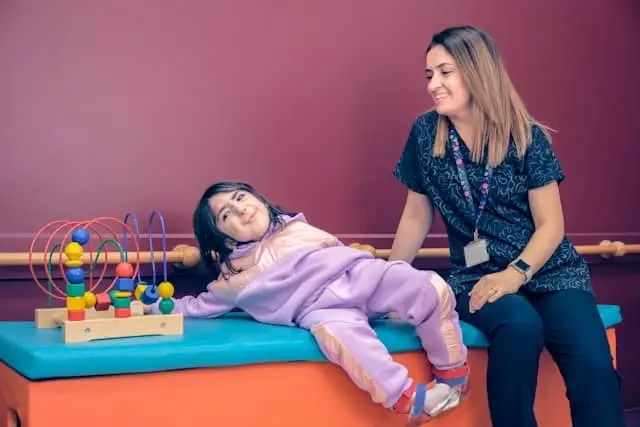
Occupational therapy is a specialised intervention designed by an occupational therapist in order to improve an individual’s ability to perform day-to-day tasks. OT helps to treat injuries, disabilities or conditions that hinder a person from handling their daily tasks. It is usually advised to get OT to help individuals recover from a trauma or an injury like
- Amputation
- Hand injuries
- Bone fractures
- TBIs (Traumatic Brain Injuries)
- Strokes and so on.
Occupational therapy can also be helpful for developmental and congenital conditions, including
- Down Syndrome
- ASD (Autism Spectrum Disorder)
- Developmental delays
It can also be recommended for individuals with chronic conditions like
After undergoing certain surgeries like abdominal, brain or head surgery, occupational therapy is also highly recommended.
OT typically involves three stages, which are assessment, interventions and evaluation and outcomes.
Assessment stage: During the first consultation with an occupational therapist, they conduct an assessment that helps them know your child better, identify the areas they need support and give them the customised treatment that would target their needs.
Intervention stage: This is the stage where resources or changes in your child’s routine and/or environment are made to help them handle their routines better. With the help of an OT, they will learn how to confidently and safely use the resources during their daily activities. Wheelchairs and artificial replacements like prosthetic limbs are common types of interventions. The intervention stage could also be in the form of exercises that tackle physical, mental or emotional health issues.
Evaluation and outcomes stage: Once they have adapted to the interventions, their progress is closely monitored by the occupational therapist. If the need for any adjustment arises, they will address it.
Does OT pose any risk to your child’s safety? Just like in physical therapy, it is safe and effective. But in cases where your child has to go about it on their own, speak to their therapist about safe methods to engage.
Occupational therapy is highly beneficial. It improves overall mental and physical health by helping individuals achieve personal activity goals with the help of the right interventions.
The Primary Focus of Occupational Therapy
Fine motor skills: Also known as fine motor coordination. It is required to perform ADLs like writing, eating, carrying, dressing and IADLs like driving, cooking and so on. It focuses on coordinating the small muscles in the wrists, hands and fingers for controlled movements. An occupational therapist would examine certain components of the hand structure and administer the required treatment. This would ensure a child’s comprehensive development in areas like bilateral coordination, hand-eye coordination, hand and wrist strength, patterns of grasp and in-hand manipulation.
Sensory processing: This matters because it focuses on how the brain receives, processes and responds to stimulants from the senses. OT plays an essential role in examining, understanding and giving support to children faced with sensory processing challenges.
Cognitive skills: Cognitive challenges can impact a child’s life in ways that can affect their quality of life. Sometimes it is caused by a traumatic brain injury, dementia or certain disabilities. OT helps individuals with these challenges to adjust to changes, maintain their independence and go about performing their daily activities. Although OT cannot undo a severe case of cognitive decline, it can help to reduce its impact on the individual’s daily life.
ADLs (Activities of Daily Living): Think of this as the regular activities that can be performed without assistance. Bathing, feeding, dressing, using the toilet and so on. This is also a primary focus of occupational therapy because these basic activities are the foundation of living independently. By focusing on ADLs, it helps to prevent institutionalisation, and it boosts a child’s overall quality of life.
Common Goals in a Clinical Setting
The use of the S.M.A.R.T goals also comes into play here. Occupational therapists define goals that are to be achieved for every milestone a person hits during the sessions and towards the end. Some of the common goals set in occupational therapy are:
- Improving fine and gross motor skills and coordination
- Improving attention, memory and proactive problem-solving skills
- Learning environmental adaptation and safety strategies
- Encouraging social participation for mental and emotional health
- Improving independence in performing ADLs
The Difference Between Physical Therapy and Occupational Therapy: A Head-to-Head Comparisons
| TYPE OF THERAPY | PHYSICAL THERAPY (PT) | OCCUPATIONAL THERAPY (OT) |
| PRIMARY GOALS | To improve your child’s gait, correct their posture, enhance joint mobility and muscle strength, Improve coordination for better gross motor functions, increase functional mobility, lessen pain and improve muscle strength. | To improve their ability to perform day-to-day tasks, achieve activity goals, improve their overall mental and physical health and improve independence in performing Activities of Daily Living (ADLs). |
| FOCUS AREA | Biomechanics (how an individual’s bones, ligaments, tendons, and muscles work together), evaluating and treating gross motor deficits, non-invasive pain management, and preventing functional decline from prolonged immobility. | Fine motor skills (coordinating small muscles in their wrists, hands, and fingers), sensory processing, cognitive skills (attention, memory, problem-solving), and Activities of Daily Living (ADLs like bathing, feeding, and dressing). |
| EXAMPLE EXERCISE | Tailored treatments utilising specially designed exercises, manual therapy, progressive resistance training, and simple voluntary exercises to strengthen affected areas or loosen stiff muscles. | Practicing fine motor coordination tasks (like writing, eating, dressing), cognitive/memory exercises, learning to safely use interventions (like wheelchairs or prosthetic limbs), and practicing environmental adaptation. |
| TARGET OUTCOME | Hastening recovery, preventing a recurrence of injury or pain, preventing complications of being immobile for too long (such as rebuilding strength and loosening stiff muscles), and achieving increased functional mobility. | Safely handling daily routines, reducing the impact of cognitive or sensory challenges, encouraging social participation, and boosting independence. |
How PT and OT Work Together
The Multidisciplinary Approach: Physical therapy and occupational therapy are essential elements in the rehabilitation process. While each of them tackles different areas of improving health and restoring independence, together, they develop a comprehensive plan that provides solutions to meet the structural needs of a child. Clinics often utilise both approaches, which fosters a quicker recovery process and improves the quality of life.
For example, when a child is recovering from a serious injury or managing a neurological condition like cerebral palsy, while they are still being monitored by their doctor, a physical therapist would focus on helping them build their core strength and balance, while an occupational therapist would focus on helping them improve their fine motor skills and spatial awareness needed for the child to dress themselves or use school supplies.
Does My Child Need Physical or Occupational Therapy
Below are some of the observable signs to look out for that can indicate which therapy type will offer the best support for a child’s needs:
Signs That Indicate a Need for a PT Assessment:
- Unusual patterns of gait or walking patterns
- Noticeable challenges with coordination or strength
- They are unable to maintain balance
- Developmental milestone delays like inability to crawl, walk or stand
- Stiff muscles and/or body weakness
- Weird walking patterns like walking on their tip toes.
Signs That Indicate a Need for an OT Assessment:
- When simple daily routines like buttoning or handling zippers feel harder for them.
- When they freak out or shy away from sensory experiences like textures, loud noises e.t.c
- They have trouble staying focused or following routines.
- Difficulty participating in learning tasks like holding a pencil or completely avoiding classroom activities.
- Difficulty with visual processing, like finding objects among other objects, copying from board to paper and so on.
- Difficulty with using age-appropriate feeding skills, like using utensils and/or drinking from a cup or with a straw.
FAQs
Can a patient receive both PT and OT at the same time?
Yes, it is common to receive both therapies simultaneously. When paired together, they offer a holistic approach to recovery.
Which therapy is better for autism spectrum disorder?
The ‘better’ therapy for ASD can be a combination of different therapies because the most effective therapy is highly customised and designed to meet a child’s needs. However, occupational therapy is often used for ASD to assist with sensory processing integration, fine motor skills, and daily routine transitions.
Do I need a doctor’s referral to start therapy?
In most cases, parents have direct access to seek a first appointment without referral, but some factors like location, health insurance policies and clinical practices may require an official referral from a pediatrician to get an appointment.
Next Steps: Booking a Comprehension Assessment
Navigating your child’s developmental milestones can feel overwhelming, but you don’t have to bear all the burden alone. Early intervention is very important, whether you notice challenges with simple daily activities or patterns different from what would seem normal.
To change your perspective from having unanswered questions to understanding what the answers to your questions mean, it is time to take the next step.
Partner with Amazing Souls Care.
At Amazing Souls Care, founded by Aisha Sule, we provide you with a safe and nurturing environment that focuses on real-time progress. Aisha is a Certified Special Needs Therapist with over 13 years of hands-on experience, providing targeted support to children and young persons with diverse developmental needs. We celebrate every little win, and we recognise that milestones are personal and progress is not the same for every child. You can expect honest communication, evidence-based strategies, fierce advocacy and parental empowerment when you come to us.
Take the first step today, book a comprehensive assessment with Amazing Souls Care, and let’s unlock your child’s fullest potential together.